Event planning and equipment selection · 6 minute read
Planning restrooms for a wedding or outdoor event
Restrooms are the last thing anyone wants to think about when planning an outdoor wedding and the first thing guests notice when they are wrong.
This is the planning conversation we have with event customers, written down.
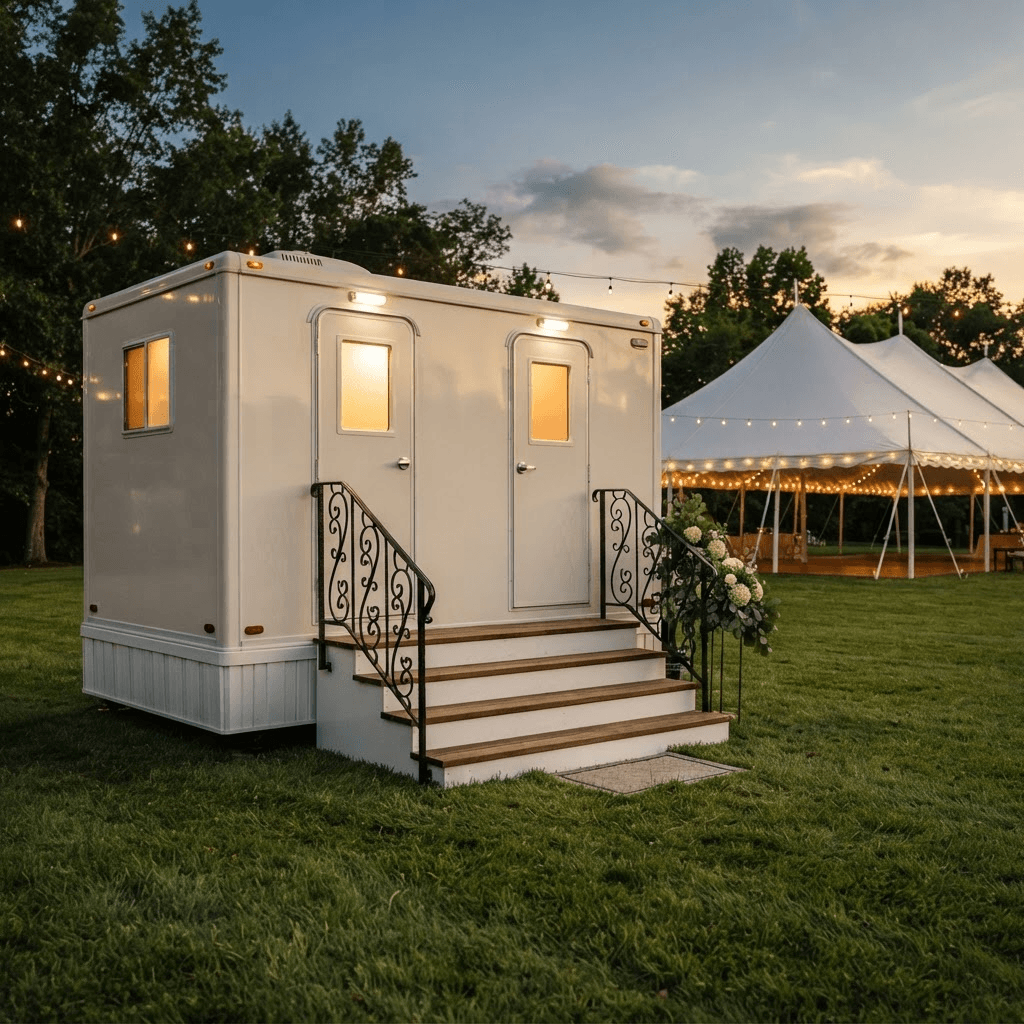
Start with the venue's real capacity, not its stated one
Plenty of barns, wineries and private properties in Lake and Geauga counties advertise themselves as event-ready with two indoor restrooms. Two restrooms are fine for a small dinner and completely inadequate for 120 guests with a bar running.
Count only the restrooms your guests can actually reach during the event — not staff facilities, not the house bathroom upstairs, not anything behind a door that will be locked.
Deluxe units or a restroom trailer?
This is the main decision, and the honest answer depends on the site as much as the budget.
A practical middle path that works well: one trailer or a cluster of deluxe units in the main guest area, plus standard units tucked away for vendors, crew and the setup day. Your caterer does not need the nice one.
| Deluxe flushing units | Restroom trailer | |
|---|---|---|
| Feel | A clearly better portable restroom | Reads as an indoor restroom |
| Site needs | Any firm, level spot | Tow route, level pad, power, sometimes water |
| Sink | Inside the unit | Vanity with running water |
| Climate | Ambient | Heated and air conditioned |
| Cost | Moderate | Significantly higher |
| Capacity | Add units as needed | Fixed number of stations per trailer |
Accessible provision is not optional
If you are inviting guests, plan for at least one wheelchair-accessible unit. Placement is where it usually goes wrong: an accessible unit needs level, firm ground and a clear route from the event area with no step, no soft grass and no gravel trench in between.
Note that restroom trailers have steps. A trailer alone does not provide accessible provision unless it is a specifically configured accessible model — if the trailer is your main facility, pair it with a ground-level accessible unit.
Renting an accessible unit does not by itself make an event ADA compliant. Compliance covers routes, parking, signage and much more. Where the event is open to the public, check the current ADA standards or your permit conditions rather than relying on a rental company's summary.
Handwashing and the details guests notice
- A dedicated handwashing station wherever food is served — vendors and health inspectors will both look for it
- Lighting on the path and inside the unit for anything running past dusk
- A hedge, fence line or draping to screen units from the main sightline and photographs
- Placement downwind and away from the dining area
- Clear, unfussy signage so nobody has to ask
Timeline
For peak season Saturdays in May, June, September and October, book as early as you can reasonably commit — a few weeks is comfortable, a few days is a gamble on whatever is left in the yard. Trailers are the scarcest item and the first to go.
Delivery the day before is standard for a weekend event: it takes the delivery off your critical path and gives you a chance to see the placement while there is still time to change it. Pickup is normally the next business day, which for a Saturday wedding means Monday.
Tell us about the awkward parts
Long gravel driveways, a ceremony on one side of a property with the reception on the other, a field that floods, a gate that is narrower than it looks. None of it is a problem if we hear about it while planning. All of it is a problem on the morning of the wedding.
Want this applied to your job?
Describe the site and the dates and we will do the sizing with you, out loud, including the parts we are unsure about.